
Challenge Description
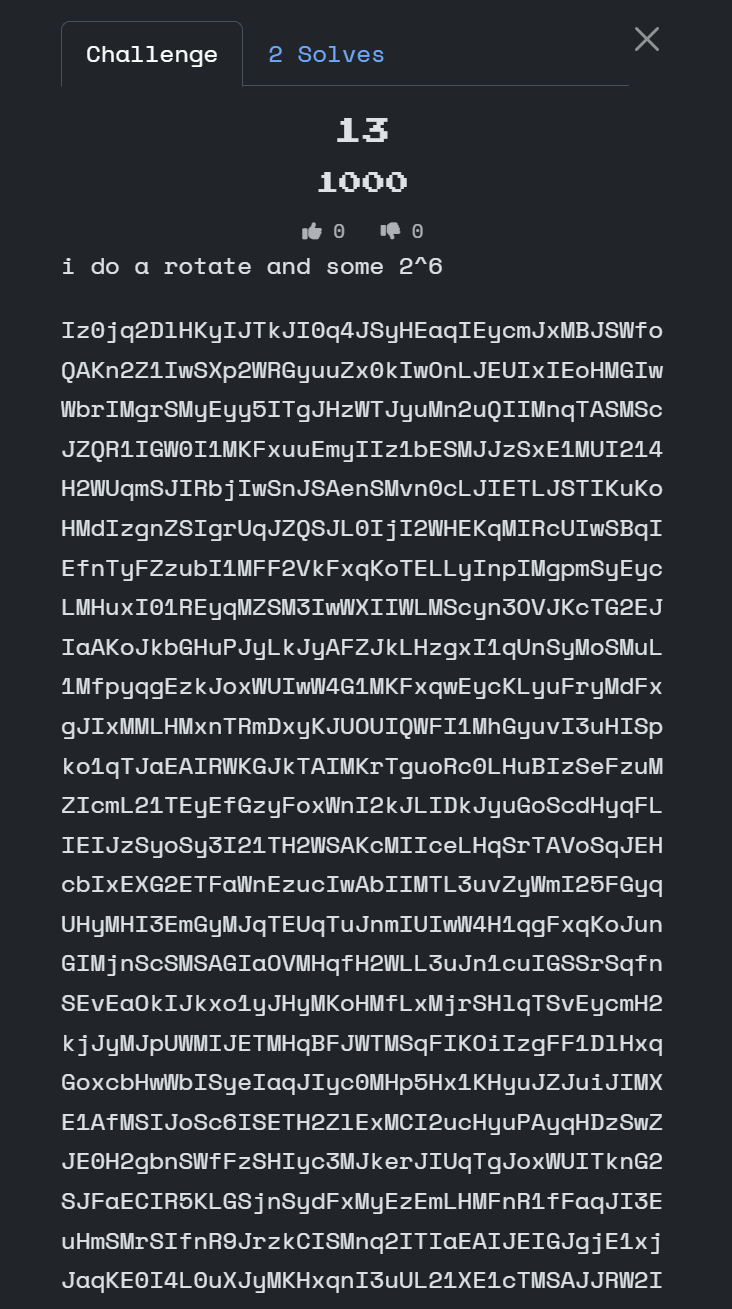
The challenge provided an encoded text block along with a short hint:
Description
i do a rotate and some 2
Ciphertext:
Iz0jq2DlHKyIJTkJI0q4JSyHEaqIEycmJxMBJSWfoQAKn2Z1IwSXp2WRGyuuZx0kIwOnLJEUIxIEoHMGIwWbrIMgrSMyEyy5ITgJHzWTJyuMn2uQIIMnqTASMScJZQR1IGW0I1MKFxuuEmyIIz1bESMJJzSxE1MUI214H2WUqmSJIRbjIwSnJSAenSMvn0cLJIETLJSTIKuKoHMdIzgnZSIgrUqJZQSJL0IjI2WHEKqMIRcUIwSBqIEfnTyFZzubI1MFF2VkFxqKoTELLyInpIMgpmSyEycLMHuxI01REyqMZSM3IwWXIIWLMScyn3OVJKcTG2EJIaAKoJkbGHuPJyLkJyAFZJkLHzgxI1qUnSyMoSMuL1MfpyqgEzkJoxWUIwW4G1MKFxqwEycKLyuFryMdFxgJIxMMLHMxnTRmDxyKJUOUIQWFI1MhGyuvI3uHISpko1qTJaEAIRWKGJkTAIMKrTguoRc0LHuBIzSeFzuMZIcmL21TEyEfGzyFoxWnI2kJLIDkJyuGoScdHyqFLIEIJzSyoSy3I21TH2WSAKcMIIceLHqSrTAVoSqJEHcbIxEXG2ETFaWnEzucIwAbIIMTL3uvZyWmI25FGyqUHyMHI3EmGyMJqTEUqTuJnmIUIwW4H1qgFxqKoJunGIMjnScSMSAGIaOVMHqfH2WLL3uJn1cuIGSSrSqfnSEvEaOkIJkxo1yJHyMKoHMfLxMjrSHlqTSvEycmH2kjJyMJpUWMIJETMHqBFJWTMSqFIKOiIzgFF1DlHxqGoxcbHwWbISyeIaqJIyc0MHp5Hx1KHyuJZJuiJIMXE1AfMSIJoSc6ISETH2ZlExMCI2ucHyuPAyqHDzSwZJE0H2gbnSWfFzSHIyc3MJkerJIUqTgJoxWUITknG2SJFaECIR5KLGSjnSydFxMyEzEmLHMFnR1fFaqJI3EuHmSMrSIfnR9JrzkCISMnq2ITIaEAIJEIGJgjE1xjJaqKE0I4L0uXJyMKHxqnI3uUL21XE1cTMSAJJRW2IzcTLJRkIKuKJTuILzknIyyeJxgwEyMkHzg0I1MfpRuJI3EYLGNkEIWfGyMFoRLmIHMSBIOECG0=
The title “13” and the phrase “i do a rotate and some 2^6” pointed directly to the operations needed:
- “rotate” paired with the title suggested ROT13.
- , pointing to Base64 encoding.
- Extending the theme of 13, the payload looked like it had been wrapped in Base64 13 times.
I tested this in CyberChef. An initial ROT13 operation followed by 13 chained From Base64 operations decoded the string completely.
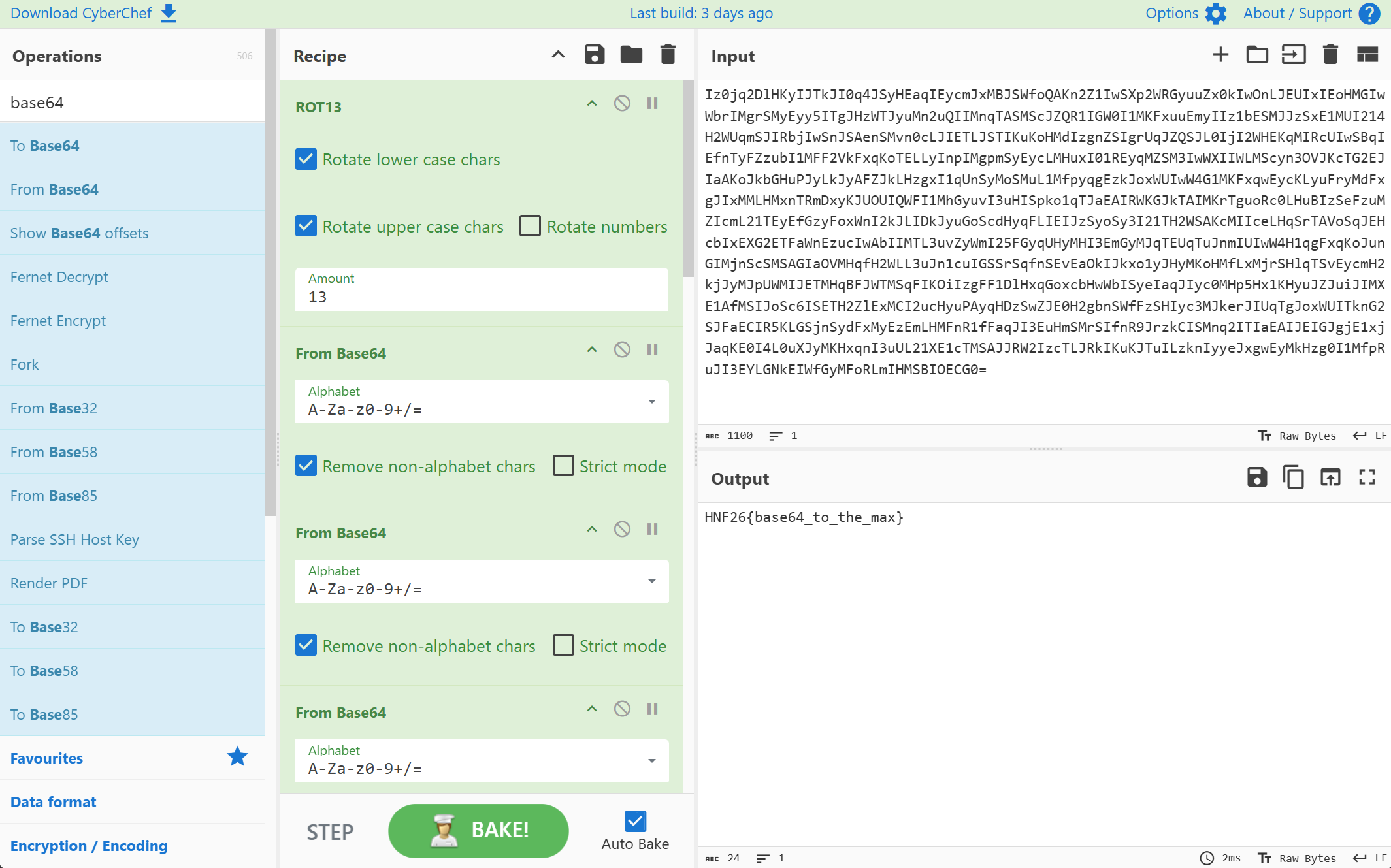
Repeated Base64 layers
Encoding text repeatedly with Base64 makes it about a third larger each time, so the blob shrinks by the same factor as each layer is removed. That is why the final result is only a few bytes long. After ROT13, the text starts with
Vm0w, which is the well-known look of text that has been Base64-encoded many times over, so it was a quick sign that more layers were hiding underneath.
The same process can be automated with a short Python script. It reads the ciphertext from cipher.txt:
import base64
import codecs
from pathlib import Path

data = Path("cipher.txt").read_text().strip()

# Apply ROT13 once
data = codecs.decode(data, "rot_13")

# Decode Base64 13 times
for _ in range(13):
    data = base64.b64decode(data).decode("utf-8")

print(data)
Running it printed the flag:
┌──(nepz㉿nepz)-[~]
└─$ python3 solve.py
HNF26{base64_to_the_max}
Flag
HNF26{base64_to_the_max}